
Costa Rica is one of those rare destinations that delivers on every promise. It is a country roughly the size of West Virginia, yet it holds about five percent of all the species on Earth. The beaches stretch for miles. The volcanoes are still active. The sloths really do hang from the trees, moving so slowly you might mistake them for part of the branch. And the people greet each other with a phrase that sums up the entire national attitude: pura vida — pure life.
For families looking for an adventure that everyone can enjoy, Costa Rica is hard to beat. It is close to the United States (about a five-hour flight from most East Coast cities), safe and welcoming, and packed with the kind of experiences that turn kids into nature lovers and parents into repeat visitors. Whether you are watching a sea turtle nest on a moonlit beach or zipping through a cloud forest canopy, this is a place where memories are made.
Costa Rica does not just show you nature. It drops you right in the middle of it — and once you have been that close, you never see the world quite the same way again.
When to Go
The best time to visit Costa Rica is during the dry season, from December through April. Skies are clear, trails are firm, and the beaches are at their best. This is peak season, so popular hotels and tours book up months in advance — planning ahead is essential. The green season (May–November) brings afternoon rain showers, but also lower prices, fewer crowds, and a landscape that is impossibly lush. Many experienced travelers actually prefer the green season for its quiet beauty and better deals.
A Country Built Around Nature
Costa Rica takes conservation seriously. About twenty-five percent of the entire country is protected land — national parks, biological reserves, and wildlife refuges. That commitment shows. The rainforests are thick and alive with sound. Howler monkeys call across the treetops at dawn. Toucans flash their bright beaks through the canopy. Tree frogs the size of your thumbnail glow in shades of red and blue. It is the kind of place where you do not need to go looking for wildlife — the wildlife comes to you.
The country sits between two oceans, the Pacific and the Caribbean, and both coasts have their own personality. The Pacific side offers long golden beaches, world-class surf breaks, and dramatic sunsets. The Caribbean coast is more laid-back, with a reggae-influenced culture, coral reefs for snorkeling, and dense jungle that comes right down to the sand. Many travelers visit both coasts in a single trip, which is easy to do since the country is so compact.
The Must-See Destinations
Arenal Volcano and La Fortuna
Arenal Volcano is one of Costa Rica’s most iconic landmarks. This nearly perfect cone rises above the surrounding rainforest, and while it has been quiet since 2010, the geothermal activity underneath keeps the area buzzing. The town of La Fortuna sits at the base and serves as a hub for adventure. You can hike old lava trails through the national park, go white-water rafting on the Pacuare River, or take a guided night walk to spot nocturnal creatures like kinkajous and red-eyed tree frogs.
But the real highlight here is the hot springs. Volcanic heat warms dozens of natural and resort-style pools scattered around the area. Imagine soaking in mineral-rich water surrounded by tropical gardens while the volcano looms in the background. The best properties offer private spring experiences with dinner included — a perfect way to end an adventure-filled day.

Costa Rica’s rainforests hold an astonishing five percent of the world’s biodiversity
Monteverde Cloud Forest
If Arenal is about fire and water, Monteverde is about mist and mystery. This cloud forest sits high in the mountains, where the air is cool and the trees are draped in moss, orchids, and bromeliads. Visibility can shift in minutes as clouds roll through the canopy, giving the forest an almost magical quality.
Monteverde is famous for two things: biodiversity and zip-lining. The forest is home to more than 400 species of birds, 100 species of mammals, and thousands of plant species. Guided nature walks reveal creatures you would never spot on your own — a quetzal hiding in the branches, a glass frog with a transparent belly, a hummingbird no bigger than your thumb. For families with older kids, the zip-line courses here are world-class, sending you flying above the cloud forest canopy on cables that stretch hundreds of feet between platforms.
The Coastlines
Costa Rica’s Pacific coast is lined with beach towns that range from lively to secluded. Manuel Antonio National Park combines white sand beaches with dense forest, and you can often spot monkeys and iguanas right on the sand. The Guanacaste region in the north is drier and sunnier, with resort-style beaches and excellent conditions for surfing, sailing, and fishing.
On the Caribbean side, Tortuguero National Park is one of the most important nesting sites for green sea turtles in the Western Hemisphere. From July through October, turtles come ashore at night to lay their eggs, and guided tours let you watch this incredible natural event up close. It is the kind of experience that stays with a child forever.
Where to Stay
Costa Rica’s best hotels and lodges are designed to put you as close to nature as possible without sacrificing comfort. These three properties each offer a different side of the country.
Nayara Gardens — Arenal
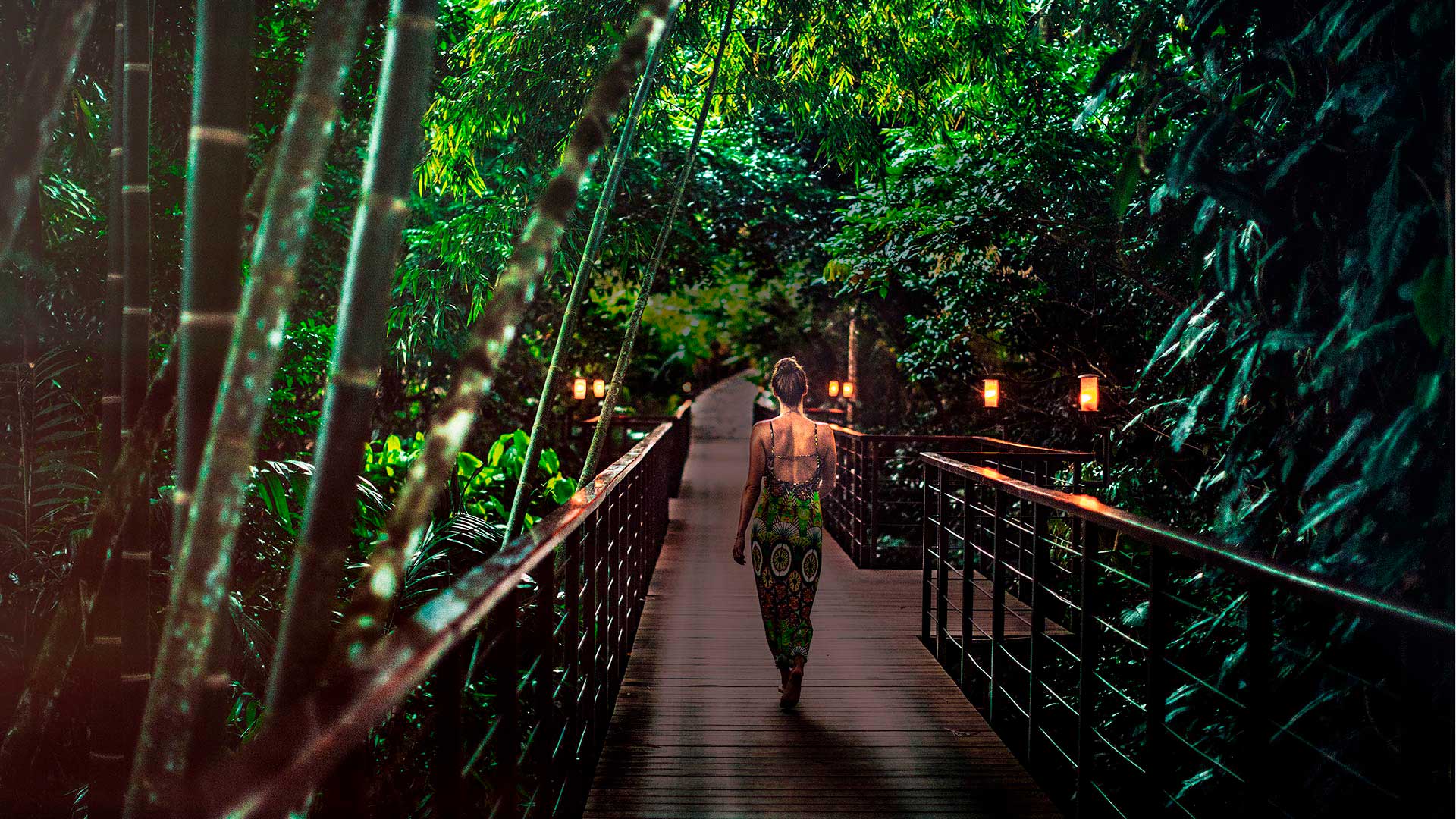
Nayara Gardens — rainforest casitas with volcano views and private hot springs
Nayara Gardens is an adults-only luxury retreat set in the rainforest near Arenal Volcano, and it consistently ranks among the best hotels in Central America. The freestanding casitas are tucked into lush tropical gardens, each with a private deck and outdoor Jacuzzi overlooking the volcano. The property has multiple restaurants, a world-class spa, and natural hot spring pools fed by volcanic heat. What makes Nayara special is how it balances adventure and relaxation — you can spend the morning on a guided hike through the national park and the afternoon floating in a warm spring with a cocktail in hand.
We can arrange suite upgrades when available, private hot spring experiences, and guided nature excursions from the property.
Pricing
High season (Dec–Apr): $500–$1,200/night
Low season (May–Nov): $300–$700/night
Lapa Rios Lodge — Osa Peninsula

Lapa Rios Lodge — where the rainforest meets the Pacific on the Osa Peninsula
If you want to experience Costa Rica’s wildest corner, Lapa Rios is the place. This award-winning eco-lodge sits on a private reserve of over 1,000 acres of primary rainforest on the remote Osa Peninsula, one of the most biodiverse places on earth. The open-air bungalows are perched on a ridge overlooking the Pacific Ocean, and the sounds of the jungle surround you day and night. Guided walks reveal scarlet macaws, four species of monkeys, poison dart frogs, and if you are lucky, a tapir or a puma. Lapa Rios proves that eco-tourism and luxury can go hand in hand.
We can arrange private wildlife tours, snorkeling excursions to Caño Island, and seamless transfers to and from the peninsula.
Pricing
High season (Dec–Apr): $450–$900/night
Low season (May–Nov): $280–$600/night
Andaz Costa Rica — Peninsula Papagayo

Andaz Papagayo — Pacific coast luxury with a distinctly Costa Rican soul
For families or couples looking for a full-service Pacific coast resort, the Andaz at Peninsula Papagayo delivers a polished experience with a distinctly Costa Rican soul. The design draws on local craftsmanship and materials, and the property is surrounded by a protected dry tropical forest. Two beaches, multiple pools, a golf course, and a marina give you plenty of options, while the on-site restaurants serve creative dishes made with ingredients from the resort’s own farm. It is an excellent home base for exploring Guanacaste’s coastline, or for simply doing nothing at all.
We can arrange VIP amenities, room upgrades, resort credits, and family-friendly activity packages.
Pricing
High season (Dec–Apr): $400–$1,000/night
Low season (May–Nov): $250–$550/night
Ready to start planning your Costa Rican adventure? Let’s design your perfect itinerary together.
Book a Free ConsultationWhat to Do
Experiences Worth Booking
- Arenal volcano hike and hot springs — explore the old lava trails through Arenal Volcano National Park, then soak in naturally heated mineral pools surrounded by tropical gardens as the volcano looms above
- Monteverde cloud forest zip-lining — fly through the misty canopy on world-class zip-line courses that stretch hundreds of feet between platforms high above the forest floor
- White-water rafting on the Pacuare River — paddle through Class III and IV rapids on one of the most scenic river runs in the world, carving through deep jungle gorges and past cascading waterfalls
- Sea turtle nesting tours in Tortuguero — visit one of the most important green sea turtle nesting sites in the Western Hemisphere, where guided nighttime tours let you watch turtles come ashore to lay their eggs
- Snorkeling at Caño Island — take a boat to this biological reserve off the Osa Peninsula, where the water is clear, the coral is healthy, and you can swim alongside manta rays, sea turtles, and schools of tropical fish
- Wildlife night walk — join a guided walk after dark near Arenal or Monteverde to spot the creatures that come alive at night, including red-eyed tree frogs, kinkajous, and sleeping toucans
Three Restaurants You Cannot Miss
Restaurante Silvestre — San José
Most travelers fly through San José without stopping, but Restaurante Silvestre is reason enough to spend a night in the capital. This farm-to-table fine dining restaurant showcases the incredible diversity of Costa Rican ingredients through a creative, seasonal tasting menu. The kitchen works directly with small farms and foragers across the country, and every dish highlights something unexpected about the local landscape. The atmosphere is elegant but relaxed, and the staff is genuinely passionate about what they serve. It is one of the best meals you will have in Central America.
Ginger — Playa Hermosa
Tucked into the hillside above Playa Hermosa on the Pacific coast, Ginger is a lively, creative restaurant that blends Pacific Rim flavors with fresh local ingredients. The menu features dishes like seared ahi tuna with wasabi, coconut shrimp, and Asian-inspired salads, all served in a colorful open-air setting with great cocktails and a fun atmosphere. It is the kind of place where dinner turns into a long evening of good food, conversation, and maybe one more round of their signature mojitos.
Morpho’s — La Fortuna
Not every great meal needs to be fancy. Morpho’s in La Fortuna is a beloved local spot that serves authentic Costa Rican comfort food at its best. The casado — a traditional plate of rice, beans, salad, plantains, and your choice of meat or fish — is exactly the kind of hearty, satisfying meal you want after a day of adventure. The fresh fruit juices are outstanding, the portions are generous, and the prices are refreshingly fair. It is the real Costa Rica on a plate, and you will probably end up eating here more than once.
Wildlife You Will Actually See
Creatures to Watch For
- Three-toed sloths — hanging from cecropia trees, often visible from hotel grounds
- White-faced capuchin monkeys — curious and playful, common in Manuel Antonio
- Toucans and scarlet macaws — their bright colors make them easy to spot against the green canopy
- Sea turtles — nesting on both Pacific and Caribbean beaches depending on the season
- Howler monkeys — you will hear them before you see them, especially at sunrise
- Humpback whales — visible off the Pacific coast from July through November
Getting Around
Transportation Tips
- Private transfers — the most comfortable way to move between regions; your advisor can arrange door-to-door service with bilingual drivers
- Domestic flights — Sansa Airlines connects San José to La Fortuna, Quepos (Manuel Antonio), Drake Bay (Osa), and Guanacaste, saving hours of mountain driving
- 4WD rental — some back roads and Osa Peninsula access require a high-clearance vehicle, especially in green season
- Boat transfers — Tortuguero National Park is accessible only by boat or small plane, adding to its remote, untouched feel
Why Work With a Travel Advisor
Costa Rica offers a staggering number of options, and that can feel overwhelming when you are trying to plan a family trip. Which region should you visit first? How many nights in each location? Which eco-lodge actually lives up to the photos? A travel advisor who knows Costa Rica well can design an itinerary that flows naturally, with private transfers between regions, guides who are great with kids, and lodges that balance adventure with comfort.
What Your Advisor Handles
- VIP hotel amenities and room upgrades
- Private naturalist guides for each region
- Family-friendly activity planning
- Seamless inter-region transfers
- Preferred rates at top eco-lodges
- Restaurant reservations at top tables
- Custom itinerary routing and pacing
- 24/7 on-trip support for any changes
These perks come at no extra cost to you — our advisory services are complimentary when you book through us.