
Iceland is the kind of place that makes you question everything you thought you knew about what a landscape could look like. Geysers erupt from the ground. Glaciers cover active volcanoes. Waterfalls pour off cliffs into black sand beaches. Hot springs steam in the middle of lava fields. And all of this happens on an island roughly the size of Kentucky, sitting in the North Atlantic just below the Arctic Circle and only a five-hour flight from the US East Coast.
What makes Iceland so extraordinary is not just the individual sights — it is how many of them exist in such a small space. You can drive twenty minutes and pass through what feels like three completely different planets. It is a place that feels both ancient and brand new at the same time, shaped by the same volcanic forces that are still actively reshaping it today. Iceland is not just a destination. It is an experience that stays with you long after you leave.
Iceland does not try to impress you. It simply exists in all its raw, volcanic, otherworldly beauty — and lets you decide how to feel about it.
When to Go
Iceland is a year-round destination, but the experience changes dramatically with the seasons. Summer (June–August) offers the midnight sun, the warmest temperatures (around 50–60°F), and access to highland roads that are closed the rest of the year. Winter (November–February) is dark, cold, and magical — the Northern Lights are at their best, and the landscape takes on an otherworldly beauty under snow and ice. Shoulder months like May and September split the difference nicely, with decent weather, fewer crowds, and a chance at both long daylight and early aurora activity.
The Golden Circle
If you have limited time in Iceland, the Golden Circle is where you start. This 190-mile loop from Reykjavik takes you to three of the country’s most famous natural attractions, and you can drive it in a single day — though taking two days gives you more time to explore and fewer crowds at each stop.
Thingvellir National Park is where the North American and Eurasian tectonic plates are literally pulling apart. You can walk between the two continental plates in a dramatic rift valley that grows a few centimeters wider every year. This is also where Iceland’s parliament, the Althing, was founded in 930 AD, making it one of the oldest parliamentary sites in the world. For adventurous travelers, snorkeling or diving in the Silfra fissure — a crack between the plates filled with glacial water so clear you can see over 300 feet — is one of the most unique experiences in all of Iceland.
The next stop is Geysir, the geothermal area that gave all geysers their name. The original Great Geysir rarely erupts anymore, but its neighbor Strokkur goes off every five to ten minutes, sending a column of boiling water up to 100 feet into the air. The final stop is Gullfoss, a massive two-tiered waterfall that thunders into a deep canyon with enough force to shake the ground beneath your feet. On a sunny day, rainbows arc across the mist.
The Ring Road
For travelers who want the full Iceland experience, the Ring Road is the way to do it. Route 1 circles the entire island — roughly 830 miles — and most people take eight to ten days to drive it. The route passes through fishing villages, volcanic deserts, glacier-carved valleys, and stretches of road where you will not see another car for miles. It is one of the great road trips in the world, and every section of the island has something completely different to offer.
On the southeastern coast, Jökulsárlón is a lagoon filled with icebergs that have broken off the edge of Vatnajökull, Europe’s largest glacier. The icebergs range from white to electric blue to deep black from volcanic ash trapped in the ice, and they drift slowly toward the ocean. Across the road, Diamond Beach is where smaller chunks of ice wash up on black volcanic sand, glistening like scattered jewels.
Reynisfjara, near the village of Vik, is Iceland’s most famous black sand beach. Towering basalt columns rise from the sand like a giant pipe organ, and massive sea stacks stand just offshore. The waves here are powerful and unpredictable, so you need to keep your distance from the waterline. But as a place to stand and feel the raw power of the North Atlantic, there is nothing quite like it.

Iceland’s landscapes shift from waterfalls to glaciers to volcanic plains within a single drive
Where to Stay
Iceland’s best hotels are built to connect you with the landscape, not shield you from it. These three properties each offer a completely different way to experience the country.
The Retreat at Blue Lagoon — Grindavik

The Retreat at Blue Lagoon — luxury carved into the volcanic landscape
Built directly into a mossy lava field beside the famous Blue Lagoon, The Retreat is Iceland’s most striking luxury hotel. Each suite features floor-to-ceiling windows overlooking the geothermal waters and volcanic rock, with private lagoon access so you can slip into the warm, milky-blue water whenever you like. The subterranean spa carved into the lava is unlike anything else in the world, and the on-site restaurant, Moss, serves a refined Icelandic tasting menu in a dining room that feels like it grew out of the earth itself.
We can arrange priority lagoon access, suite upgrades when available, and private dining experiences at Moss restaurant.
Pricing
High season (Jun–Aug): $1,500–$3,500/night
Low season (Nov–Feb): $800–$2,000/night
Ion Adventure Hotel — Nesjavellir

Ion Adventure Hotel — sharp modern design on an ancient lava field
Perched on a lava field near Thingvellir National Park, the Ion Adventure Hotel is a design-forward property that looks like it landed from another planet. The architecture is all sharp angles and glass, designed to frame the surrounding mountains and the Northern Lights that dance overhead in winter. The Northern Lights Bar, with its floor-to-ceiling windows and geothermal-heated outdoor hot tub, is one of the best spots in Iceland to watch the aurora without leaving your hotel. It is also an ideal base for Golden Circle exploration.
We can arrange private Golden Circle tours, Northern Lights excursions, and Silfra snorkeling from the hotel.
Pricing
High season (Jun–Aug): $400–$900/night
Low season (Nov–Feb): $250–$550/night
Deplar Farm — Troll Peninsula
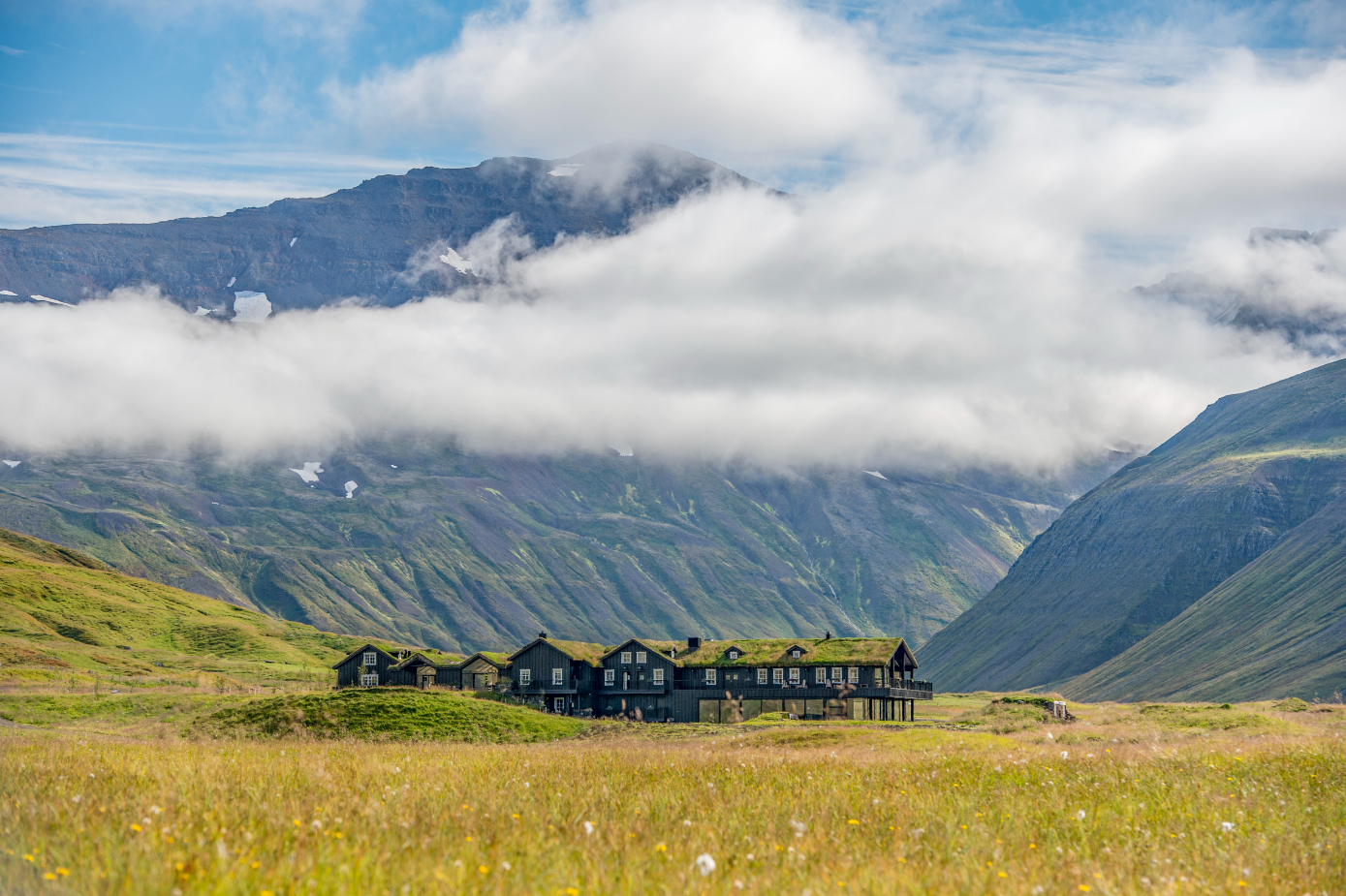
Deplar Farm — a former sheep farm turned exclusive mountain lodge
Deep in northern Iceland’s Troll Peninsula, Deplar Farm is a former sheep farm that has been transformed into an exclusive luxury lodge. With just thirteen suites, it feels more like a private estate than a hotel. The activities are the draw here — heli-skiing in winter, fly fishing and mountain biking in summer, and year-round access to a geothermal infinity pool with views of the surrounding peaks. It is remote, quiet, and about as far from ordinary as a hotel can get.
We can arrange heli-skiing packages, private fishing guides, and customized multi-day adventure itineraries.
Pricing
High season (Jun–Aug): $2,500–$5,000/night
Low season (Nov–Feb): $1,500–$3,200/night
Ready to start planning your Icelandic adventure? Let’s design your perfect itinerary together.
Book a Free ConsultationWhat to Do
Experiences Worth Booking
- Drive the Golden Circle on a private tour, stopping at Thingvellir’s tectonic rift valley, the erupting Strokkur geyser, and the thundering Gullfoss waterfall — all in a single day
- Strap on crampons and hike across the ancient blue ice of Sólheimajökull glacier with an expert guide, walking through ice ridges and crevasses that shift and change every season
- Board a boat in Husavik for a whale watching tour in Skjalfandi Bay, where humpback whales, minke whales, and dolphins surface just a few hundred feet from the bow
- Snorkel the Silfra fissure in Thingvellir, floating between the North American and Eurasian tectonic plates in glacial water so clear you can see over 300 feet in every direction
- Hunt for the Northern Lights by super jeep on a winter evening, heading far from city lights with a local guide who knows exactly where the skies are clearest
- Cruise through Jökulsárlón glacier lagoon by boat, drifting among icebergs that range from brilliant white to deep electric blue, broken off from Europe’s largest glacier
Three Restaurants You Cannot Miss
Dill — Reykjavik
Dill holds the distinction of being Iceland’s only Michelin-starred restaurant, and it earns that star with every course. The menu follows the New Nordic philosophy — seasonal, local, and deeply connected to the land. Expect dishes built around Icelandic lamb, Arctic char, seabird, and foraged herbs, presented with an artist’s eye for detail. The dining room is intimate and understated, letting the food do all the talking. It is the single best fine-dining experience in the country.
Grillið — Reykjavik
Located on the top floor of the Radisson Blu 1919 hotel, Grillið offers panoramic views of Reykjavik’s colorful rooftops and the harbor beyond. The kitchen serves a creative Icelandic tasting menu that highlights local ingredients like langoustine, puffin, and reindeer, prepared with modern techniques and a sense of playfulness. The combination of sweeping views, elegant service, and food that surprises you at every turn makes this one of the most memorable dinners in the city.
Salka — Husavik
In the charming whale-watching town of Husavik on Iceland’s north coast, Salka is the kind of restaurant that feels like a local secret. The menu focuses on fresh-catch seafood pulled straight from the harbor — think pan-fried Arctic char, creamy lobster soup, and grilled catch of the day. The setting is cozy and unpretentious, with views of the fishing boats bobbing in the bay. After a morning on the water watching humpback whales, there is no better place to sit down for lunch.
The Blue Lagoon and Beyond
The Blue Lagoon is Iceland’s most famous attraction for a reason. This geothermal spa, set in a black lava field about 45 minutes from Reykjavik, is filled with milky-blue water rich in silica and minerals. The water stays between 98 and 104 degrees Fahrenheit year-round, and soaking in it while steam rises around you and lava rock stretches to the horizon is an almost surreal experience. Iceland also has dozens of lesser-known hot springs scattered across the countryside. Many are free to visit and completely uncrowded. A good guide or travel advisor will know which ones are worth the detour.
Wildlife & Seasonal Highlights
- Northern Lights season runs from September through March, with the best chances on clear, dark nights away from Reykjavik’s light pollution
- Puffins nest along Iceland’s cliffs from May through August, with the largest colonies on the Westman Islands
- Whale watching from Husavik runs April through October — humpback whales, minke whales, and occasionally blue whales
- The Westfjords, in the far northwest, are Iceland’s most remote and least-visited region — dramatic cliffs, hot springs, and almost no tourists
- Summer brings nearly 24 hours of daylight, perfect for long drives and midnight hikes
Getting Around
Transportation Tips
- 4WD rental car — essential for highland roads (F-roads) and winter driving; your advisor can arrange a vetted rental with full insurance
- Private guide and driver — the most comfortable way to see the country, especially in winter when road conditions can change quickly
- Domestic flights — Air Iceland Connect links Reykjavik to Akureyri and other regional airports, saving hours of driving on longer itineraries
- Road conditions — always check road.is before driving; highland roads are closed from October through June in most years
Why Work With a Travel Advisor
Iceland is easy to reach but tricky to plan well. Road conditions change fast, accommodation outside Reykjavik books up months in advance during peak season, and many of the best experiences — private glacier hikes, helicopter tours over volcanic craters, remote hot springs with no signage — require local knowledge and advance arrangements. A travel advisor takes the guesswork out of all of it.
What Your Advisor Handles
- VIP hotel amenities and room upgrades
- Private guides for glaciers and volcanoes
- Northern Lights excursion planning
- 4WD rental and insurance logistics
- Ring Road itinerary routing and pacing
- Restaurant reservations at top tables
- Helicopter and heli-skiing bookings
- 24/7 on-trip support for any changes
These perks come at no extra cost to you — our advisory services are complimentary when you book through us.