
Mexico is one of the most misunderstood travel destinations in the world. Many people think of it as a beach vacation — and the beaches are genuinely spectacular — but the country is so much deeper, richer, and more surprising than that single story suggests. Mexico has ancient ruins that rival anything in Egypt or Greece. It has a culinary tradition so important that UNESCO declared it a masterpiece of world heritage. It has vibrant cities, misty mountain villages, underground rivers, and art scenes that are attracting travelers from every corner of the globe.
The truth is, you could visit Mexico a dozen times and still only scratch the surface. But three regions in particular capture the country’s extraordinary range: the Riviera Maya for beaches and ancient history, Oaxaca for art and gastronomy, and Mexico City for world-class culture. Together, they tell the story of a country that is as complex as it is beautiful.
Mexico is not one destination — it is a continent of experiences packed into a single country, and every region tells a different story.
When to Visit
- Riviera Maya — November through April for warm, dry weather and manageable humidity
- Oaxaca — October through May, with Day of the Dead celebrations in late October and early November
- Mexico City — Pleasant year-round; driest months November through April
- Rainy season — June through September brings afternoon showers, but mornings are usually clear with lower prices and smaller crowds
The Riviera Maya
Beaches and Cenotes
The Riviera Maya stretches along the Caribbean coast of the Yucatan Peninsula, from Cancun in the north to the Sian Ka’an Biosphere Reserve in the south. The beaches here are the kind you see in screensavers — powdery white sand, turquoise water so clear you can see your toes, and palm trees leaning gently toward the sea. But what sets this coastline apart from other tropical destinations is what lies just beneath the surface.
The Yucatan is riddled with cenotes — natural sinkholes where the limestone roof of an underground river has collapsed, revealing crystal-clear pools of fresh water. Some cenotes are open to the sky, surrounded by jungle. Others are partially enclosed, with shafts of sunlight piercing through openings in the rock above. Swimming in a cenote is one of those experiences that feels almost otherworldly — the water is cool, impossibly clear, and tinged with the blue-green glow of minerals. There are thousands of cenotes across the Yucatan, and the best ones are often found with the help of a local guide who knows which are worth the detour.
Tulum and Chichen Itza
The Riviera Maya is also home to some of the most impressive Maya ruins in the Americas. Tulum sits on a cliff overlooking the Caribbean — it is the only major Maya city built on the coast, and the combination of ancient stone structures and turquoise sea below is unforgettable. Chichen Itza, about two hours inland, is one of the New Seven Wonders of the World. The great pyramid of Kukulcan dominates the site, and during the spring and fall equinoxes, the setting sun creates a shadow that looks like a serpent slithering down the pyramid’s staircase. It is a site that rewards a guided visit, as the history and astronomy behind the architecture are fascinating.

Mexico’s cultural depth and visual richness reward the curious traveler
Oaxaca
A UNESCO World Heritage City
Oaxaca (pronounced wah-HAH-kah) is the cultural heart of Mexico, and it is having a major moment. This highland city in southern Mexico was designated a UNESCO World Heritage Site for its colonial architecture and the nearby archaeological site of Monte Alban, but what draws travelers today is the living culture — the art, the textiles, the food, and the warmth of the people.
The city center is built around a grand zocalo (main square) surrounded by colonial-era buildings painted in shades of green, terracotta, and gold. The streets radiate outward into neighborhoods filled with galleries, workshops, and markets. Oaxaca is famous for its artisan traditions — hand-woven rugs from Teotitlan del Valle, black pottery from San Bartolo Coyotepec, and the brightly painted wooden figures called alebrijes that have become symbols of Mexican folk art.
Mexico City Highlights
- National Museum of Anthropology — one of the finest museums in the world, with an unmatched collection of pre-Columbian art and artifacts
- Frida Kahlo Museum (Casa Azul) — the vivid blue house in Coyoacan where Frida was born, lived, and created her most famous works
- Roma and Condesa — tree-lined streets filled with cafes, bookshops, galleries, and some of the best casual dining in the city
- Chapultepec Park — one of the largest urban parks in the Western Hemisphere, home to a castle, botanical gardens, and the city’s zoo
- Xochimilco — the ancient canal system on the city’s southern edge, where colorful trajinera boats glide past floating gardens
Where to Stay
Mexico’s luxury hotel scene is one of the most exciting in the world right now, with properties that range from jungle wellness retreats to cliffside treehouses to historic city palaces. These three capture the country’s incredible range.
Chablé Yucatán — Near Mérida
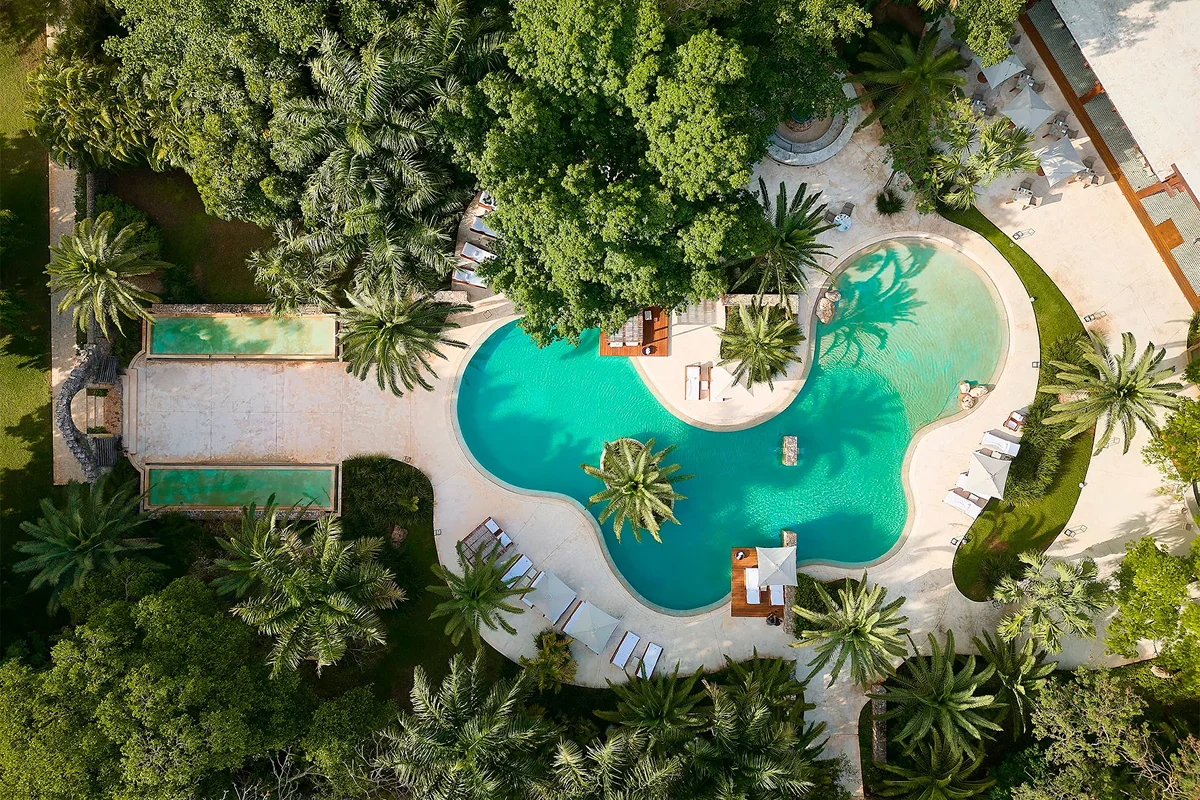
Chablé Yucatán — a wellness retreat built around a sacred private cenote
Hidden in the Yucatan jungle outside the colonial city of Mérida, Chablé is a wellness resort built around a private cenote. The spa treatments take place in and around this natural sinkhole, which feels almost sacred in its beauty. The casitas are spacious and surrounded by lush gardens, and the restaurant serves refined Yucatecan cuisine made with ingredients grown on the property. It is the kind of place where you arrive wound tight and leave feeling like a completely different person.
Pricing
High season (Dec–Apr): $800–$2,200/night
Low season (May–Oct): $500–$1,400/night
Advisor clients receive complimentary spa credits, room upgrades when available, and early check-in/late checkout.
One&Only Mandarina — Riviera Nayarit

One&Only Mandarina — jungle treehouses and cliff villas above the Pacific
Perched between jungle-covered mountains and the Pacific Ocean, One&Only Mandarina is a dramatic collection of treehouses and cliff villas connected by elevated walkways through the canopy. The design is bold and organic, with open-air living spaces that blur the line between indoors and out. A private beach, a world-class spa, and multiple restaurants round out the experience. It feels wild and luxurious at the same time — like glamping taken to its absolute pinnacle.
Pricing
High season (Dec–Apr): $1,200–$3,500/night
Low season (May–Oct): $700–$2,000/night
Advisor clients receive complimentary breakfast daily, resort credits, and priority reservations at on-site restaurants.
Hotel Downtown México — Mexico City
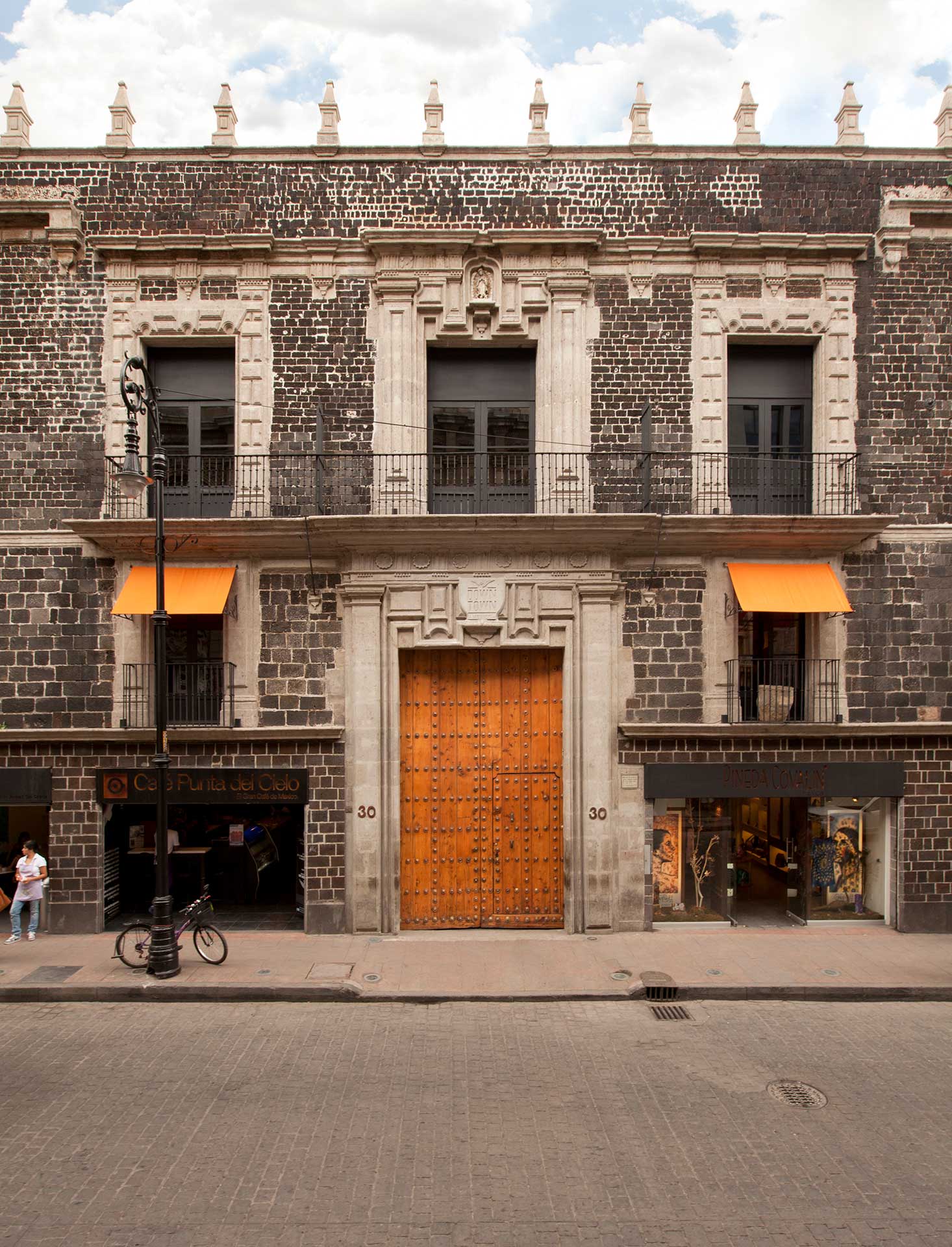
Hotel Downtown México — a restored 17th-century palace in the heart of the capital
Set inside a restored 17th-century palace in the heart of Mexico City’s historic center, Hotel Downtown is boutique luxury with serious character. The rooftop pool overlooks the city’s cathedral and the bustling Zócalo square below, and the interiors mix colonial architecture with contemporary Mexican art and design. It is the perfect base for exploring the capital — museums, markets, and some of the best restaurants in the world are all within walking distance.
Pricing
High season (Dec–Apr): $200–$500/night
Low season (May–Oct): $120–$300/night
Advisor clients receive room upgrades when available, welcome amenity, and late checkout.
Cenotes, treehouses, and mole negro — Mexico rewards those who go beyond the beach. Let us design your perfect itinerary.
Request Your Free ConsultationWhat to Do
Top Experiences Across Mexico
- Swim in a private cenote at sunrise before the crowds arrive, floating in crystal-clear turquoise water inside a limestone cavern lit by shafts of golden morning light
- Explore the clifftop ruins of Tulum, the only major Maya city built on the Caribbean coast, where ancient stone temples look out over white sand and impossibly blue water
- Take a mezcal distillery tour in the hills outside Oaxaca, watching artisan producers roast agave in underground pits and distill small-batch spirits the way their families have for generations
- Visit the Frida Kahlo Museum in the Coyoacan neighborhood of Mexico City — the vivid blue house where Frida lived, painted, and left her mark on the world
- Shop the Benito Juárez market in Oaxaca for handwoven textiles, black pottery, local chocolate, and bags of dried chilies in every color and heat level imaginable
- Float over the ancient pyramids of Teotihuacán in a hot air balloon at dawn, watching the Pyramid of the Sun emerge from the morning mist below
Three Restaurants You Cannot Miss
Pujol — Mexico City
Chef Enrique Olvera’s Pujol is consistently ranked among the best restaurants in the world, and for good reason. The taco omakase at the casual counter is a masterclass in Mexican flavors — each taco built from a single, perfectly executed idea. The formal tasting menu goes deeper, with dishes that reimagine traditional Mexican ingredients through a modern lens. The famous mole madre, with its two-tone swirl of fresh and aged mole, is a dish you will never forget. Reservations book up fast, so plan ahead.
Casa Oaxaca — Oaxaca
Dining on the rooftop terrace at Casa Oaxaca, with the domes of Santo Domingo church glowing in the evening light, is one of the great restaurant experiences in Mexico. The kitchen serves traditional Oaxacan cuisine elevated to fine-dining standards — rich, complex mole negro ladled over tender chicken, handmade tlayudas with fresh cheese and chapulines, and seasonal dishes that change with what the local markets offer. The mezcal list is outstanding, and the atmosphere is warm and unhurried.
Hartwood — Tulum
Hartwood is a restaurant that runs entirely on fire. There is no electricity, no gas, and no walk-in refrigerator — everything is cooked over open flames and wood-burning ovens, using ingredients sourced that morning from local fishermen and farmers. The menu changes daily, but expect whole grilled fish, wood-roasted vegetables, and handmade tortillas served under a thatched palapa roof open to the jungle night. Reservations are essential and sometimes feel impossible to get, but the experience is worth every bit of the effort.
What to Eat in Mexico
- Mole — Oaxaca is famous for its seven traditional moles, each built from dozens of ingredients including chilies, chocolate, nuts, and spices. Mole negro, the most celebrated, can take days to prepare
- Tlayudas — giant crispy tortillas topped with beans, cheese, and meat — the pizza of Oaxaca
- Chapulines — toasted grasshoppers seasoned with lime and chili, a beloved Oaxacan snack
- Tamales — wrapped in banana leaves in the south, corn husks in the central highlands, with fillings that vary by region
- Mezcal — Oaxaca is the heartland of production; visiting a small-batch distillery in the surrounding hills is one of the great food experiences in the Americas
- Tacos al pastor — spit-roasted pork with pineapple, cilantro, and salsa on fresh corn tortillas — Mexico City’s signature street food
Getting Around
- Between regions — domestic flights connect Mexico City, Oaxaca, Cancun, and Puerto Vallarta (for Riviera Nayarit) in 1–2 hours; Volaris and VivaAerobus offer budget options
- Riviera Maya — a rental car or private driver is ideal for cenote hopping and ruins; resort transfers are typically arranged through your hotel
- Oaxaca — the city center is very walkable; hire a local guide and driver for day trips to Monte Alban, mezcal distilleries, and artisan villages
- Mexico City — Uber works well and is affordable; the metro is efficient for longer distances; walking is the best way to explore Roma, Condesa, and the historic center
- Tipping — 15–20% is customary at restaurants; hotel porters and drivers appreciate tips in pesos
Why Work With a Travel Advisor
Mexico’s size and diversity can make trip planning feel overwhelming. Should you combine the Riviera Maya with Oaxaca? Is Mexico City worth adding to a beach trip? Which cenotes are tourist traps and which are hidden gems? A travel advisor who specializes in Mexico can design an itinerary that flows smoothly between regions, with private guides who bring history to life, restaurant reservations that would take months to secure on your own, and hotel placements that match the character of each destination.
What Our Clients Receive
- Preferred rates at luxury properties
- Complimentary room upgrades
- Private cenote and ruins tours
- Priority restaurant reservations
- Daily breakfast included at hotels
- Spa and resort credits
- Domestic flight routing advice
- 24/7 on-trip support
Perks vary by property and are subject to availability at time of booking. Preferred partner benefits are exclusive to advisor-booked reservations.