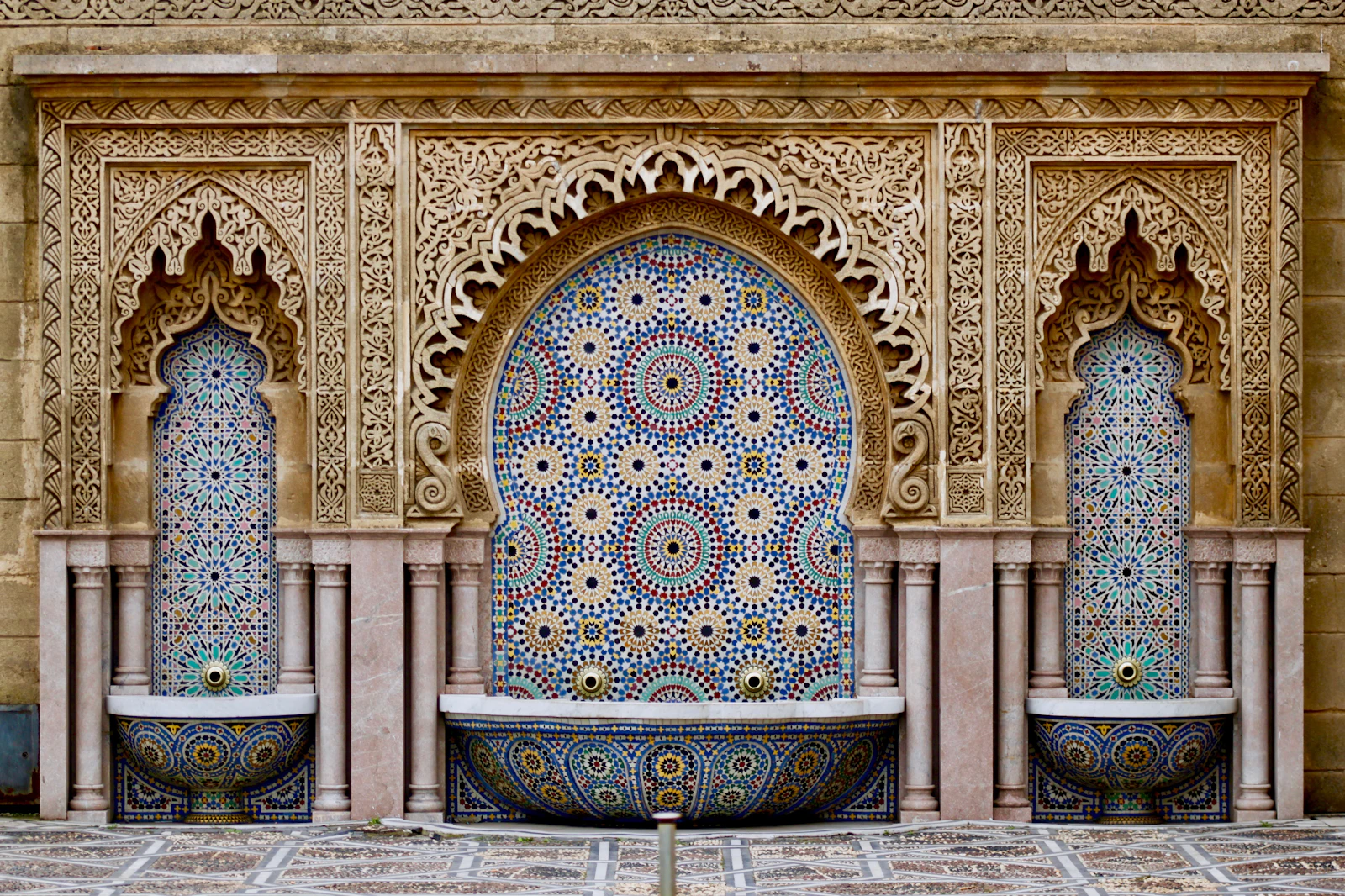
Morocco is one of those rare destinations that overwhelms your senses in the best possible way. The colors are brighter here. The spices are stronger. The sounds of the medina — the call to prayer, the clatter of copper workshops, the voices of shopkeepers calling out from their stalls — create a soundtrack unlike anywhere else on Earth. Sitting at the crossroads of Africa, Europe, and the Arab world, Morocco is a country of incredible contrasts: ancient cities and modern luxury, snow-capped mountains and endless desert, bustling market squares and silent sand dunes.
It is also far more accessible than many people realize. Direct flights from the US East Coast reach Casablanca in about seven hours, and from there the rest of the country opens up quickly by domestic flight or private car. Whether you have five days or two weeks, Morocco rewards every kind of traveler — from the culture-seeker to the adventurer to the person who simply wants to sip mint tea on a rooftop terrace and watch the sun set over the Atlas Mountains.
Morocco does not whisper. It sings, it shouts, it fills your plate and your senses until you wonder how you ever thought the world was ordinary.
When to Go
The best times to visit Morocco are March through May and September through November. Spring brings wildflowers to the Atlas Mountains and comfortable temperatures across the country. Autumn is warm and dry with golden light that makes every photograph look stunning. Summer can be brutally hot, especially in the desert and interior cities like Marrakech and Fes, where temperatures regularly top 100°F. Winter is mild in the cities but cold in the mountains, and desert nights can drop near freezing.
Marrakech: The Red City
Most trips to Morocco begin in Marrakech, and for good reason. This ancient city is one of the most vibrant places in the world. At its heart is the medina, a UNESCO World Heritage Site enclosed by miles of red-clay walls that give Marrakech its nickname. The medina is a labyrinth of narrow alleyways, covered souks, and hidden courtyards. Getting lost is part of the experience — and you will get lost, at least once. That is when you stumble onto the best things: a tiny spice shop run by the same family for three generations, a courtyard fountain surrounded by orange trees, a rooftop café with a view of the Koutoubia Mosque.
The Atlas Mountains
Just an hour’s drive from Marrakech, the Atlas Mountains rise dramatically from the plains and offer a completely different side of Morocco. Day treks with local Berber guides take you through terraced villages, walnut groves, and rocky trails with views that stretch for miles. For a longer adventure, multi-day treks to the summit of Mount Toubkal — the highest peak in North Africa at over 13,600 feet — are popular from April through October. Even if you are not a serious hiker, a half-day trip to a Berber village for a home-cooked lunch is one of the most memorable experiences in the country.
The Sahara Desert
No trip to Morocco is complete without a night in the Sahara. The journey from Marrakech takes you through the Dades Valley, past the dramatic Todra Gorge, and into the vast expanse of Erg Chebbi — a sea of golden sand dunes that reach heights of 500 feet. The approach is part of the adventure, with ever-changing landscapes that shift from green oases to red rock canyons to open desert.
At the edge of the dunes, you trade your car for a camel and ride into the desert as the sun begins to set. Luxury desert camps have transformed this experience in recent years. The best ones offer spacious tents with real beds, hot showers, and multi-course dinners served under the stars. After dinner, you sit around a fire while Berber musicians play traditional songs, and you look up at a sky so full of stars it barely looks real.
Fes & Chefchaouen
If Marrakech is Morocco’s showpiece, Fes is its soul. The medina of Fes el-Bali is the largest car-free urban area in the world, and walking through it feels like stepping back in time. Donkeys carry goods through alleys too narrow for cars. Tanneries that have operated for nearly a thousand years still dye leather using ancient methods. The University of al-Qarawiyyin, founded in 859 AD, is recognized as the oldest continuously operating university in the world. Fes is quieter and less touristy than Marrakech, and many travelers find it more rewarding for that exact reason.
Tucked into the Rif Mountains in northern Morocco, Chefchaouen is famous for its buildings painted in every imaginable shade of blue. The effect is dreamlike — wandering the narrow streets feels like walking through a painting. It is a small town, easily explored in a day or two, and it offers a peaceful contrast to the energy of Marrakech and Fes. The drive from Fes takes about four hours and passes through some of Morocco’s most beautiful countryside.

Morocco’s colors, textures, and patterns are a feast for the senses
Where to Stay
Royal Mansour — Marrakech
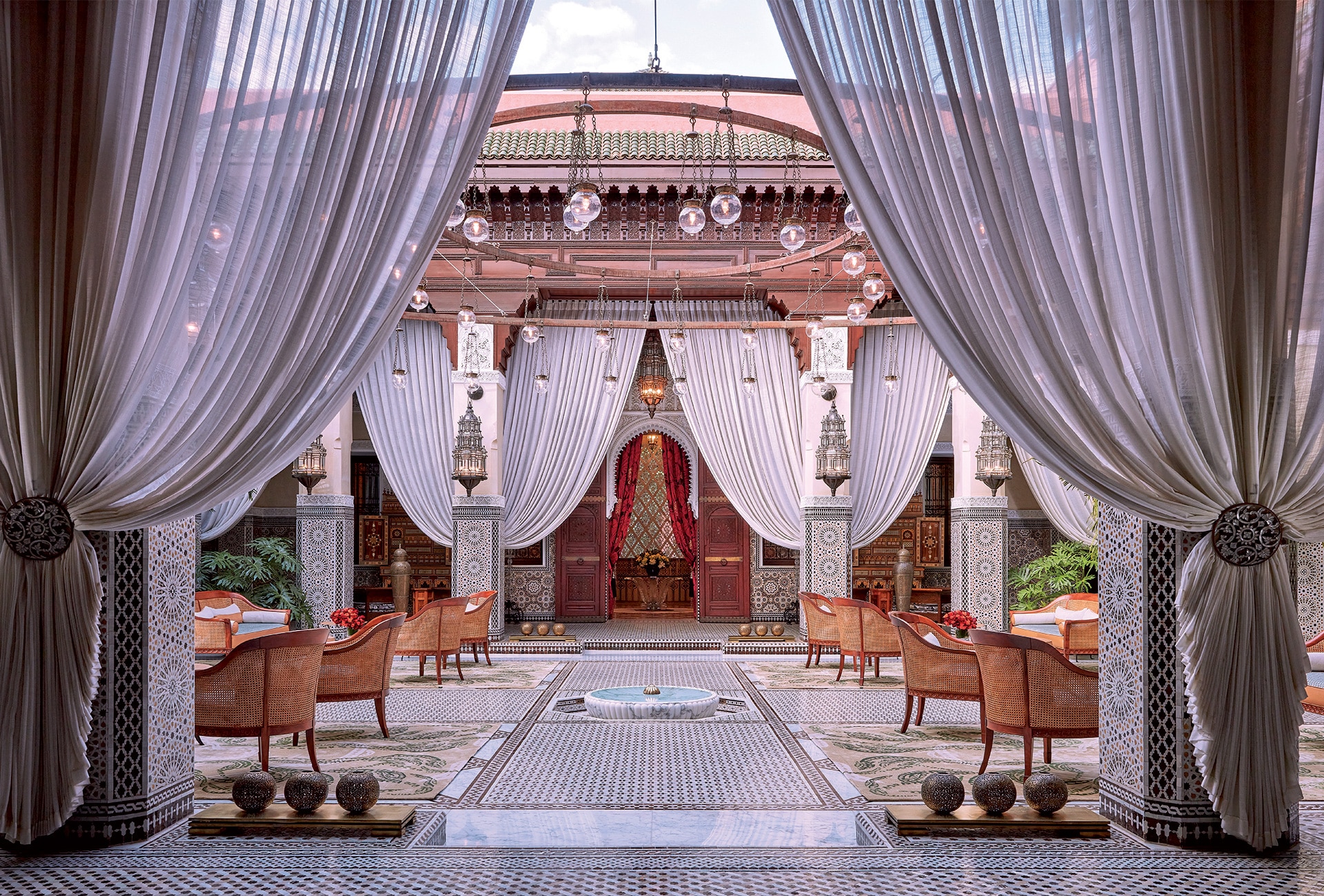
Royal Mansour — a palace of private riads in the heart of the medina
This is not just a hotel. It is a collection of private riads built within a larger riad, designed by King Mohammed VI himself. Each three-story riad has its own plunge pool, rooftop terrace, and private butler who arrives and departs through hidden underground tunnels so you never see another guest unless you want to. The tile work, carved plaster, and painted wood ceilings are museum-quality, and the spa is one of the most beautiful in the world. Royal Mansour is ultra-luxury at its finest.
We can arrange VIP welcome amenities, suite upgrades when available, and private dining experiences in the gardens.
Pricing
High season (Mar–May & Sep–Nov): $700–$2,500/night
Low season (Jun–Aug): $400–$1,500/night
Kasbah Tamadot — Atlas Mountains
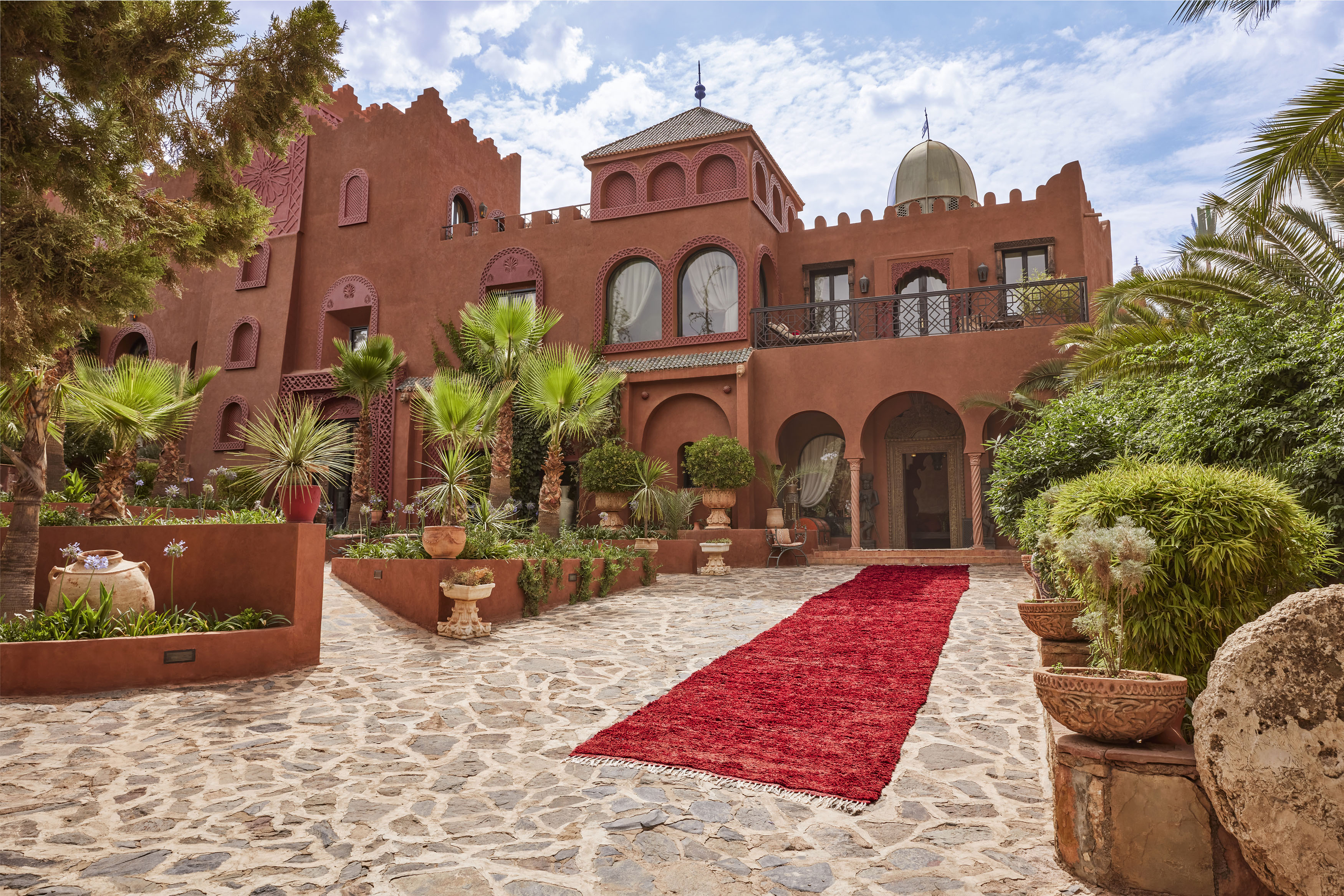
Kasbah Tamadot — Richard Branson’s mountain retreat above Marrakech
Richard Branson’s Atlas Mountain retreat sits in the foothills above Marrakech, surrounded by terraced gardens and panoramic views of the peaks. The rooms are decorated with Moroccan antiques collected from around the country, and the infinity pool overlooking the valley is the kind of place where hours disappear without you noticing. It is a wonderful two- or three-night escape from the bustle of the city, with guided hikes and Berber village visits right from the doorstep.
We can arrange private guided treks, helicopter transfers from Marrakech, and exclusive Berber cooking experiences.
Pricing
High season (Mar–May & Sep–Nov): $500–$1,500/night
Low season (Jun–Aug): $300–$900/night
Dar Ahlam — Skoura Oasis

Dar Ahlam — a hidden gem in the Skoura oasis with no menus and no schedules
Hidden in the Skoura oasis, about five hours from Marrakech, Dar Ahlam is a boutique riad that feels like a secret. With just a handful of suites, the property runs on a “no menu, no set schedule” philosophy — the chef prepares meals based on what is fresh that day, served wherever you like, whether that is by the pool, in the garden, or on the rooftop under the stars. It is remote, intimate, and deeply romantic.
We can arrange private desert excursions, stargazing dinners, and customized multi-day itineraries that route through Skoura.
Pricing
High season (Mar–May & Sep–Nov): $600–$1,800/night
Low season (Jun–Aug): $350–$1,100/night
Ready to start planning your Moroccan adventure? Let’s design your perfect itinerary together.
Book a Free ConsultationWhat to Do
Experiences Worth Booking
- Private medina tour with a local guide — the best way to navigate the labyrinth of Marrakech without getting lost, with stops at hidden workshops and tucked-away courtyards most visitors never find
- Atlas Mountains day trek to Berber villages — hike through terraced hillsides to remote mountain communities where families welcome you with fresh mint tea and home-cooked meals
- Camel caravan into the Sahara dunes — ride into the golden sands of Erg Chebbi at sunset and spend the night under a sky packed with stars at a luxury desert camp
- Traditional hammam experience — a Moroccan ritual of steam, black soap scrub, and deep relaxation that leaves your skin glowing and your mind completely quiet
- Cooking class in a Marrakech riad — learn to prepare tagine, couscous, and pastilla from a local chef, starting with a trip to the spice market to pick out your ingredients
- Shopping the souks for handmade goods — leather bags, woven rugs, hand-painted ceramics, and brass lanterns, all made by artisans who have been perfecting their craft for generations
Three Restaurants You Cannot Miss
Al Fassia — Marrakech
Tucked inside a beautiful garden setting in Marrakech, Al Fassia is run by an all-female kitchen, and the food is exceptional. The menu is traditional Moroccan done at the highest level — lamb tagine with prunes and almonds, perfectly spiced couscous, and pastilla so delicate it melts on your tongue. It has been a Marrakech institution for decades, and for good reason. This is the place to come if you want to experience the very best of Moroccan home-style cooking in a refined setting.
Le Jardin — Marrakech
Hidden inside the medina of Marrakech, Le Jardin is a secret garden restaurant that feels like stumbling into another world. Lush tropical plants surround every table, and the light filters through the canopy in a way that makes the whole space glow. The menu leans Mediterranean with Moroccan touches, and the portions are generous. It is as much about the atmosphere as the food — a calm oasis in the middle of the medina’s beautiful chaos.
Café Clock — Fes
Sitting on a rooftop in the heart of Fes, Café Clock is a cultural hub as much as a restaurant. The menu is creative and playful, with the famous camel burger being the signature dish that everyone orders at least once. On many evenings, live Gnawa musicians perform traditional spiritual music that fills the rooftop. The views over the medina rooftops are gorgeous, and the vibe is relaxed and welcoming. It is the kind of place where you come for lunch and stay until sunset.
What to Eat
Dishes You Should Not Miss
- Tagine — a slow-cooked stew of meat, vegetables, and spices, served in the cone-shaped clay pot it is cooked in
- Couscous — hand-rolled semolina traditionally served on Fridays with lamb and seven vegetables
- Pastilla — a savory-sweet pastry filled with pigeon or chicken, almonds, and cinnamon
- Mint tea — poured from a height to create a froth, served sweet and offered as a gesture of hospitality everywhere you go
- Msemen — flaky, pan-fried flatbread often eaten for breakfast with honey and soft cheese
Getting Around
Transportation Tips
- Private car and driver — the most comfortable way to travel between cities and into the mountains; your advisor can arrange vetted, English-speaking drivers for the entire trip
- Domestic flights — Royal Air Maroc connects Casablanca, Marrakech, and Fes quickly if you are short on time
- Train — the ONCF rail network links Casablanca, Marrakech, Fes, and Tangier, with the new high-speed Al Boraq line cutting the Casablanca–Tangier journey to just over two hours
- Within the medinas — on foot is the only option in the ancient city centers; a good guide makes all the difference
Why Work With a Travel Advisor
Morocco is a country that rewards insider knowledge. The difference between a frustrating medina experience and a magical one often comes down to having the right guide, the right riad, and the right route through the country. A travel advisor who knows Morocco can arrange private tours with local experts, book the desert camps that are actually luxurious, and handle the logistics of moving between cities so you can focus on the experience.
What Your Advisor Handles
- VIP hotel amenities and room upgrades
- Private guides in every city and region
- Luxury desert camp reservations
- Airport meet-and-greet services
- Private car and driver logistics
- Restaurant reservations at top tables
- Custom itinerary routing and pacing
- 24/7 on-trip support for any changes
These perks come at no extra cost to you — our advisory services are complimentary when you book through us.