
Italy does not need an introduction. But it does reward a plan. Rome, Florence, and Tuscany form the backbone of Italian travel — three destinations so rich in history, art, and food that you could spend a lifetime exploring and still have more to discover. The challenge is not finding things to do. It is choosing wisely, moving at the right pace, and knowing where to look beyond the obvious.
This is a region where a wrong turn leads to a 14th-century chapel you never knew existed. Where the best meal of your life might come from a trattoria with no sign on the door. Where the light over the Tuscan hills at sunset makes you understand why Renaissance painters never ran out of inspiration.
Italy rewards the traveler who slows down. The best discoveries here are never on the checklist — they are the ones you stumble into between the landmarks.
When to Go
April through June and September through October are the ideal windows. Spring brings wildflowers to the Tuscan countryside and pleasant walking temperatures in Rome. Early fall offers golden light, harvest festivals, and thinner crowds at the museums. July and August are hot, crowded, and expensive — many locals leave the cities entirely. If summer is your only option, plan mornings at the major sights and retreat to Tuscany or the hills in the afternoon heat.
Rome: The Eternal City
Rome is not a museum you walk through — it is a living city built on top of its own history. The Colosseum, the Pantheon, the Forum — these are not behind glass. They are woven into the streets, surrounded by espresso bars and motor scooters and laundry hanging from apartment windows. That collision of ancient and everyday is what makes Rome unlike anywhere else.

The Roman Forum — layers of history visible in every direction
What to See
The Vatican Museums and Sistine Chapel are non-negotiable, but go early — first entry is the only way to experience them without crowds pressing in from every angle. The Borghese Gallery is smaller, more intimate, and arguably more stunning, but tickets must be reserved weeks in advance. Trastevere, the neighborhood across the river, is where Rome feels most like a village — cobblestone lanes, ivy-covered trattorias, and locals who have lived there for generations.
For something most visitors miss, walk the Aventine Hill at sunset. The Giardino degli Aranci offers one of the best views of St. Peter’s dome, and the famous keyhole at the Priory of the Knights of Malta frames the dome perfectly at the end of a tree-lined path. No ticket required — just patience for the short line.
Florence: The Cradle of the Renaissance
Florence is smaller than most people expect. You can walk from the Duomo to the Ponte Vecchio in ten minutes, and from there to the Pitti Palace in five more. That compact scale is part of its magic — around every corner, there is a facade, a fresco, or a rooftop view that stops you mid-stride.

Florence’s iconic Duomo dominates the skyline from every vantage point
What to See
The Uffizi is one of the world’s greatest art museums, and we arrange private guided tours that bypass the general admission line and focus on the works that matter most. Michelangelo’s David at the Accademia is worth the visit, but the real surprise is the unfinished Prisoners sculptures lining the hallway — figures that appear to be struggling out of the marble itself.
Cross the Arno to the Oltrarno neighborhood for artisan workshops where craftsmen still make leather goods, paper, and jewelry by hand. San Miniato al Monte, the Romanesque church above Piazzale Michelangelo, offers the best panoramic view of the city — and far fewer crowds than the piazzale below.
Tuscany: The Countryside Between the Cities
Tuscany is the antidote to city fatigue. Driving through the Val d’Orcia — the postcard landscape of rolling hills, lone cypress trees, and medieval hilltop villages — is one of those travel experiences that genuinely lives up to the photograph. This is also one of the world’s great wine regions, and the best way to experience it is slowly: a vineyard lunch here, a village walk there, an afternoon on a terrace with a glass of Brunello and no agenda at all.

The Val d’Orcia — Tuscany’s iconic landscape of rolling hills and cypress-lined roads
The Towns You Need to Know
Montalcino is the home of Brunello, one of Italy’s most celebrated wines. The town itself is small and quiet, perched on a hill with a medieval fortress and sweeping views. Nearby Pienza is a Renaissance planned city with a main street lined with pecorino cheese shops and a cathedral square that overlooks the entire valley. San Gimignano, with its medieval towers jutting up from the skyline, is more touristy but undeniably stunning — visit late in the afternoon when the day-trippers leave. Cortona, made famous by a certain memoir, is charming and authentic, with Etruscan roots that predate Rome itself.
Where to Stay
This itinerary covers a lot of ground, so we recommend splitting your stay between Rome, Florence, and the Tuscan countryside. Here are the properties we trust most:
Hotel de Russie — Rome
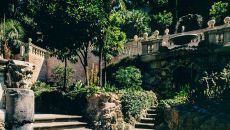
Hotel de Russie — Rocco Forte’s flagship, hidden gardens between two piazzas
Tucked between Piazza del Popolo and the Spanish Steps, Hotel de Russie is the rare luxury hotel that feels like a genuine retreat in the middle of a major city. The Secret Garden — a terraced oasis of orange trees, jasmine, and cascading greenery — is the highlight, along with the De Russie Spa by Rocco Forte. Rooms are elegant and contemporary, and the Stravinskij Bar is one of Rome’s best spots for a late-evening cocktail.
Book through us for complimentary upgrades, resort credits, and VIP amenities.
Portrait Roma — Rome
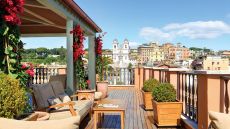
Portrait Roma — the Ferragamo family’s boutique masterpiece on Via Condotti
Owned by the Ferragamo family, Portrait Roma sits directly above the Spanish Steps on Via Condotti — Rome’s most famous shopping street. The hotel operates more like a private residence than a traditional property: complimentary minibar, a dedicated lifestyle concierge, and an intimate rooftop terrace where breakfast becomes the best part of your morning. Suites are designed with impeccable Italian taste, and every detail feels personal.
Book through us for complimentary upgrades, resort credits, and VIP amenities.
Hotel Savoy — Florence
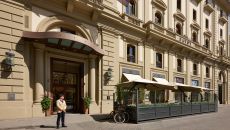
Hotel Savoy — Rocco Forte elegance on Florence’s Piazza della Repubblica
Another Rocco Forte gem, the Savoy sits on Piazza della Repubblica in the heart of Florence. Rooms are airy and refined, with a contemporary Italian aesthetic that avoids the heavy Renaissance decor of many Florentine hotels. The rooftop terrace offers direct views of the Duomo, and Irene, the hotel’s restaurant, is a destination in itself — a lively brasserie that draws locals as much as guests.
Book through us for complimentary upgrades, resort credits, and VIP amenities.
Rosewood Castiglion del Bosco — Montalcino, Tuscany
Rosewood Castiglion del Bosco — a private estate in the heart of the Val d’Orcia
This is the Tuscan countryside at its most refined. Set on a sprawling estate in the Val d’Orcia, Castiglion del Bosco offers private villas and suites with views that stretch to the horizon. The property includes a working Brunello di Montalcino winery, an 18-hole golf course designed by Tom Weiskopf, a cooking school, and a spa built into the old cellars. It is the kind of place where you arrive for two nights and wish you had booked a week.
Book through us for complimentary upgrades, resort credits, and VIP amenities.
Ready to start planning your Italian journey? We handle every detail — from securing the best rooms to arranging private museum tours and vineyard experiences.
Request Your ConsultationWhat to Do
Between three destinations, the list of possibilities is staggering. These are the experiences we recommend most to our clients:
- Private after-hours tour of the Vatican Museums — walk the Sistine Chapel in near-silence, an experience that transforms the visit entirely
- Guided walk through the Roman Forum and Palatine Hill — a good guide brings the ruins to life in a way no audio tour can match
- Private Uffizi tour in Florence — skip the line and focus on the masterpieces that matter, from Botticelli to Caravaggio
- Artisan workshop tour in the Oltrarno — visit leather workers, paper makers, and silversmiths still practicing centuries-old craft traditions
- Full-day wine tour through the Val d’Orcia — Brunello tastings in Montalcino, lunch at a family-run estate, and a stop in Pienza for pecorino
- Truffle hunting in the Tuscan countryside — follow a trained dog through the forest, then eat what you find at a private lunch prepared by the estate chef
- Cooking class at a Tuscan farmhouse — learn to make fresh pasta, ragu, and tiramisu from scratch with ingredients picked from the garden that morning
Three Restaurants You Cannot Miss
Roscioli — Rome
Part salumeria, part wine bar, part restaurant — Roscioli is where Romans go for the city’s best carbonara and cacio e pepe. The wine list runs to over 3,000 labels, and the deli counter is stacked with aged cheeses and cured meats sourced from small producers across Italy. Reserve ahead — there are only a handful of tables and it fills every night.
Il Palagio — Florence
Inside the Four Seasons Florence, Il Palagio holds a Michelin star and serves refined Tuscan cuisine in a Renaissance courtyard that feels like a painting come to life. The tasting menu is seasonal and precise, with dishes that honor Tuscan tradition while pushing it forward. The wine pairings lean into Tuscany’s best, from Chianti Classico to Brunello to lesser-known Morellino di Scansano.
Trattoria Mario — Florence
No reservations, communal tables, cash only, and some of the best Florentine cooking you will find anywhere. Mario has been serving ribollita, bistecca alla fiorentina, and handmade pasta near the San Lorenzo Market since 1953. It is loud, fast, and completely authentic. Arrive before noon or expect a line down the block.
What to Eat
Italian food is regional, and what you eat in Rome differs from what you eat in Florence and Tuscany. That is part of the joy. Here are the dishes you should not leave without trying:
- Cacio e pepe — Rome’s iconic pasta: just pecorino, black pepper, and starchy cooking water, elevated to an art form
- Supplì — fried rice balls with a molten mozzarella center, the Roman street snack that ruins all other fried food
- Bistecca alla fiorentina — a thick-cut T-bone from Chianina cattle, grilled rare over wood coals and served with nothing but olive oil and salt
- Ribollita — a hearty Tuscan bread soup made with cannellini beans, cavolo nero, and day-old bread, best in the cooler months
- Pici all’aglione — hand-rolled Tuscan pasta tossed in a slow-cooked garlic and tomato sauce, a Val d’Orcia staple
- Gelato — skip the places with mountains of brightly colored gelato and look for the ones that keep their lids on and use natural colors
Getting Around
Rome and Florence are best explored on foot, with occasional taxis or private transfers. Between the two cities, the high-speed Frecciarossa train takes just 90 minutes and runs frequently — it is faster and more enjoyable than driving. For Tuscany, a rental car or private driver is essential. The winding roads through the Val d’Orcia and Chianti are half the experience, and a driver lets you focus on the scenery (and the wine).
Why Work With a Travel Advisor
Italy is one of the most visited countries on Earth, and the difference between a good trip and an extraordinary one comes down to access — who gets you into the Uffizi before the crowds, which hotel gives you the room with the Duomo view, and which vineyard serves lunch that you will still be talking about five years from now.
What You Get When You Book Through Us
- Complimentary room upgrades at check-in (when available)
- Hotel resort credits of $100–$300+
- Early check-in and late checkout
- Private museum tours and skip-the-line access
- Reserved tables at restaurants that don’t take public bookings
- A dedicated advisor who has walked these streets firsthand
These perks are exclusive to bookings made through a Fora Travel advisor and cannot be accessed by booking direct or through online travel agencies.